Industrial Automation stories
Nearly 40% of firms have delayed growth plans as volatile power costs and supply fears squeeze investment across Australia and New Zealand.
It gives infrastructure teams rack-level visibility and control as demand rises for remote power monitoring in dense data centres and edge sites.
Pressure is mounting on data centre operators as AI workloads push chip temperatures higher and make liquid cooling more urgent.
The Seoul site could speed LG's push into home and industrial robots, as the group aims to gather 100,000 hours of training data.
Rising digital links in factories and grids are driving OT firewall demand as operators prioritise uptime, segmentation and breach containment.
The combined design could cut installation costs and copper use sharply as operators race to build more efficient AI data centres.
The deal could open a new industrial revenue stream as the group tests whether its human-monitoring technology works in factory robotics.
Delays in planning could slow deployments and postpone productivity gains as AI systems spread across cloud, data centre and edge sites.
Demand for Realtime Robotics' software is rising as automakers use it to cut production delays, prompting a leadership handover to scale growth.
The tie-up could unlock financing for AI data centres as demand for computing power outstrips the balance sheets of cloud providers.
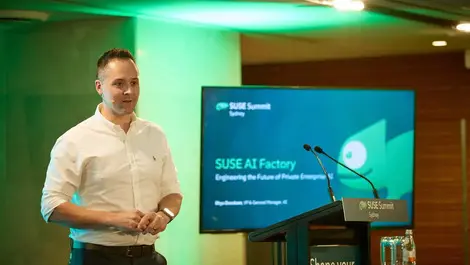
Australian miners, shippers and utilities could be next to benefit as SUSE pushes edge computing and AI inference beyond data centres.
Rising overseas sales and profit have lifted the home appliance maker to No. 231 on the Fortune Global 500, its best showing yet.
Industrial firms face growing disruption as ransomware incidents rose 12% to 1,140 in the second quarter, Dragos said.
Britain's warehouse operators could struggle to justify automation investments as Exotec says targeted tax credits would ease labour and cost pressures.
Manufacturers are weighing digitalisation, AI and cybersecurity as Thailand's factories face labour shortages, cost pressure and tighter sustainability goals.
The move opens the network to aerospace, defence and industrial firms grappling with the same software, security and systems challenges as automakers.
The move puts the Australian company's human-sensing expertise into factories and hospitals, where robots must work safely beside people.
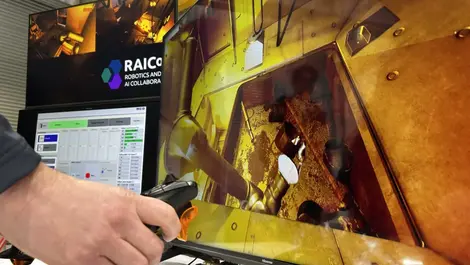
The system paid for itself in under three months, as Dugald River's AI control tool lifted zinc recovery and profits at its Queensland plant.
The new framework could cut delays in training nuclear robot operators by letting sites build and update simulator scenarios without coding skills.
Chipmakers could gain earlier fault detection as the software links equipment data, analytics and AI to improve yield and quality.